


 9.3°C,
Clear,
46%
9.3°C,
Clear,
46%
BREAKING NEWS
- അമ്പും വില്ലും എടുക്കാതെ മൂർച്ചയേറിയ വാക്കുമായി വേടനും അതിൽ വിറളിപിടിച്ചു വേടനെതിരെ ആയുധവുമായി നാട്ടിലെ രാജാക്കന്മാരുടെ കാടൻമാരും.
- അറബി നാട്ടിലെ മൃഗീയ പീഡനത്തിനും യാതനകൾക്കും ഇടയിലെ അതിജീവനത്തിൻ്റെ കഥ പറയുന്ന ആടുജീവിതം റിവ്യൂ ബോംബിങ്ങിനെ അതിജീവിച്ചു മുന്നേറുബോൾ അതിലെ ചില കാണാപ്പുറങ്ങൾ പറയാം
- അമ്പും വില്ലും എടുക്കാതെ മൂർച്ചയേറിയ വാക്കുമായി വേടനും അതിൽ വിറളിപിടിച്ചു വേടനെതിരെ ആയുധവുമായി നാട്ടിലെ രാജാക്കന്മാരുടെ കാടൻമാരും.
- അറബി നാട്ടിലെ മൃഗീയ പീഡനത്തിനും യാതനകൾക്കും ഇടയിലെ അതിജീവനത്തിൻ്റെ കഥ പറയുന്ന ആടുജീവിതം റിവ്യൂ ബോംബിങ്ങിനെ അതിജീവിച്ചു മുന്നേറുബോൾ അതിലെ ചില കാണാപ്പുറങ്ങൾ പറയാം
Economic Recession Or Mess
Home / Finance/ Economic Recession Or Mess
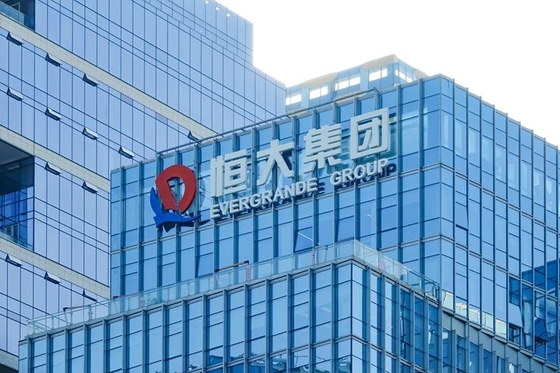
China evergrande
China's Evergrande crisis will be chance to trigger a global economic mess? Here is collective Study report
By - Siju Kuriyedam Sreekumar --
Thursday, September 23, 2021 , 12:59 PM
Click here to read in Malayalam
What is the Evergrande debt crisis and why does it matter for the global economy?
Evergrande is China’s second largest Real Estate company.
As the company struggles to repay creditors, global markets have responded with selloffs.
Evergrande debt is now is over $305 billion.
Questions loom about a government bailout and whether Evergrande is in fact too big to fail.
Evergrande, now the world’s most indebted real estate company, is on the brink of collapse and the news sent global markets tumbling during trading on Monday. The company has warned investors that it could default on its debts and ratings agency Fitch has said that default ‘appears probable’ while Moody’s, has said ‘Evergrande is out of cash and time’.
Evergrande (previously Hengda Group), founded by Xu Jiayin in 1996 and headquartered in Shenzhen, China, rapidly expanded during China’s housing boom, buying land and delivering over 1300 market-rate and luxury apartment developments in more than 280 cities across China.
As residential sales began to slow in recent years, Evergrande debt increased and the company diversified into other sectors such as electric vehicles, football and even bottled water. Evergrande employs 200,000 people directly and indirectly is responsible for an estimated 3.8 million jobs annually.
So what went wrong?
While it is still not clear what will happen to Evergrande in the coming days... what is clear is that the world needs to closely monitor asset prices and debt levels to preserve the health of an already fragile global economy
A regulatory storm brewing
Government regulation in China’s property sector has been increasing as the government has been working to control surging home prices and excessive borrowing.
In 2020, the government imposed the ‘three red lines’ on certain developers to help curb debt levels, forcing them to deleverage. The three red lines policies require:
1.70 percentage ceiling on liabilities to assets (excluding advance proceeds from projects sold on contract)
2.100 percentage cap on net debt to equity
3.Cash to short-term borrowing ratio of at least one
This resulted in Evergrande unsuccessfully trying to sell off some of its business, evidenced by a leaked letter from Evergrande to the government in September 2020 asking for assistance as they faced a cash crisis, which sparked increased investor concern. An estimated two thirds of Evergrande’s obligations are to homeowners who pre-paid for close to 1.4 million residential properties that remain undeveloped.
The government has also worked to control housing prices, which could further impact developers’ returns and the ability to pay their debt service. Housing is a key source of household wealth in China and if the government succeeds in curbing residential property prices, existing mortgage holders could lose equity in their homes. Household debt now stands at 62percentage of GDP in China, which has largely been acquired through residential mortgages. This is one reason for such a large amount of Evergrande debt.
The increasing regulatory environment in China could also be a deterrent to continued foreign investment as seen recently when Blackstone abandoned plans to acquire SOHO China due to prolonged regulatory reviews of the deal.
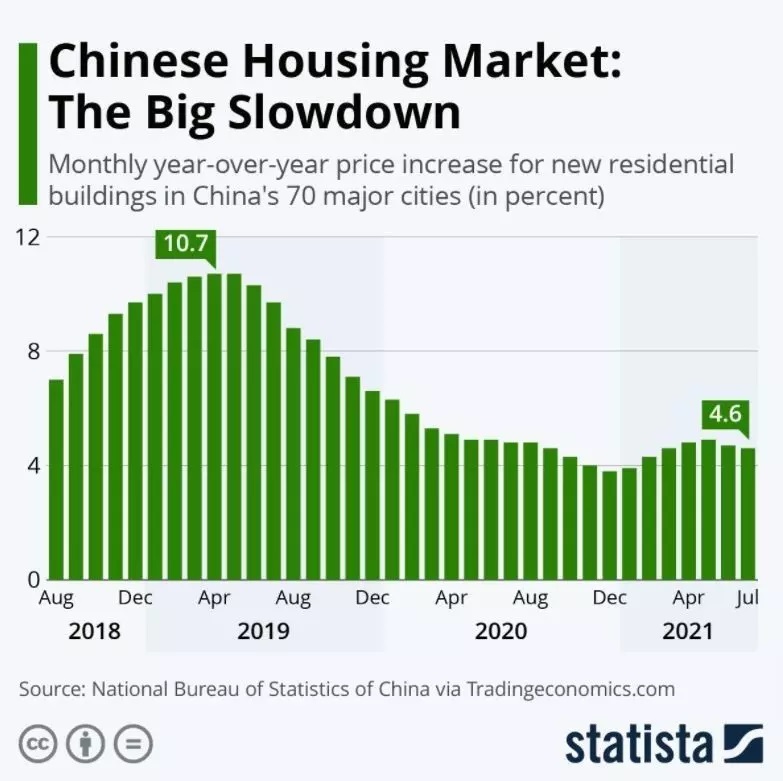
China evergrande
Chinese housing market slowdown is also a reason for Evergrande debt.
Evergrande debt - A domino effect
As early as 2018 the Chinese Central Bank highlighted in its financial instability report that companies like Evergrande could pose a systemic risk to the nation’s financial system. Evergrande has an enormous web of contractors and other businesses in the region that are owed money from the developer.
In recent weeks contagion fears have intensified as 128 banking institutions and 121 non-banking institutions are exposed to Evergrande.
On Monday, the S&P 500 fell 2.24percentage, its worst day since May and the VIX, an index which measures S&P volatility, hit 26.7percentage, its highest jump since May. There are also concerns around the impact on commodities if demand wanes due to slowing construction, with metal prices taking a hit during trading on Monday.
Despite Evergrande’s efforts to lift confidence, with its chairman promising to fulfil responsibilities, the markets are now looking to Beijing to stem the contagion.
What can we learn from Evergrande debt story?
As housing prices surge in other regions, the world can learn from China and past housing bubbles to prevent future crises. The World Economic Forum’s Emerging Horizons in Real Estate: An Industry Initiative on Asset Price Dynamic report suggests the following to help avoid future real estate asset bubbles:
Market data: Regulatory authorities need to work with the real estate industry to deliver robust and timely market data, analysis and information, including data related to the financing of real estate investment and development, noting the global and national initiatives already under way.
Transparency and understanding: National and international authorities should adopt targets for delivering enhanced transparency and understanding, broadly defined, across real estate markets and related markets for securities and derivatives.
External policy impacts: The real estate industry should engage with governments and policy-makers at global, national and local levels about the impacts of public policies on the real estate sector.
Information clearing house (“hub”): A platform should be established for tracking and communicating significant new policies and recent research to senior decision-makers in the real estate, banking and finance sectors, and to public-sector policy-makers to address areas like developments in the derivatives market and global and national banking sector reform.
Emerging markets: Specific policy options are required by emerging market economies (EMEs); the World Economic Forum should provide its convening platform for addressing specific issues arising from asset price volatility in EMEs.
Can China's Evergrande crisis trigger a global economic mess?
On Monday, the Dow Jones Industrial Average in the US and the S&P500 slumped almost 2 per cent. A major reason behind the market plunge was thousands of miles away in China, where one of the largest real estate developers is on a verge of collapse reeling under a mountain of debt. Investors are worried that the contagion effects will spread to other markets.
The sell-off continued in Asian markets like Tokyo on Tuesday, where the Nikkei Index shed more than 2 per cent.
China has seen a boom in the housing market. But, there have been growing signs of weakening sales. Evergrande is one of the biggest property developers in China, with over 1,300 projects. The wider Evergrande Group has interests ranging from wealth management to electric cars and it also owns the football team Guangzhou FC.
Evergrande has more than $300 billion in debt and there are growing fears that it won’t be able to pay up and default on its dues. That could have a huge impact on China’s major financial institutions and in turn have a cascading effect across China’s real estate market. China is a big consumer of commodities and a slowdown in the real estate market could hit commodities like metals hard. These worries led to a sharp sell-off in shares of steel and other metal companies on Monday.
Investors are also worried that this could yet turn out to be like a Lehman Brothers movement. In 2008, the collapse of the US investment bank and the subsequent bailouts of several others led to a global financial meltdown. At a time when stock markets have rallied sharply in the past year even as economies remain hit by the COVID-19 pandemic's rebound, a crisis like the one at Evergrande has made investors nervous.
According to strategists at Swiss investment bank UBS, Evergrande's liabilities are said to involve more than 130 banks and over 120 non-banking institutions, while the developer also hires 4 million people every year for project developments, something which could lead to increased investor concerns around financial stability risks in China.
What could cause spillover into global markets is a domino effect of credit events, given both banks and non-banks with large exposure to Evergrande could potentially go under or be forced into restructuring.
“This would again create spill over into other Chinese financial assets and drive underperformance of financials in particular across both DM (developed markets) and EM (emerging markets) credit/equity markets, led by those names with direct exposure either to Evergrande itself, its subsidiaries or its creditors,” the UBS strategists said.
So far at least, there has been no indication from the Chinese government that it will step in and bail out Evergrande. Credit rating agency S&P Global Ratings feels China will not provide any direct support to the company for mow; it will only be compelled to step in if there is a wider contagion that could cause multiple developers to fail and pose systemic risks to the economy.
How big is the risk of global financial institutions getting impacted due to these risks?
UBS estimates the total liability of the Chinese property sector is close to $4.7 trillion. However, the offshore bond market accounts for just 4.5 per cent ($209 billion) of the total financing for the sector. Evergrande Group’s total liability is $313 billion, which is 6.5 per cent of the total liability of the Chinese property sector. In terms of total offshore bonds outstanding, Evergrande has $19 billion, which is equivalent to roughly 9 per cent of the total offshore bond market.
“Since the company is currently considered the bellwether for the property market and also a gauge of investor’s risk appetite for the broader offshore market, it is fair to assume that there could be some systemic risk to the market if the ordeal is left unmitigated,” said David Chao, global market strategist, Asia Pacific (ex-Japan) at Invesco.
Chao says it is unlikely that policymakers in China would permit a widespread default scenario since this would bring systemic risks to the financial system.
Evergrande’s debt is around 2-3 per cent of Chinese banks’ core tier-1 capital. China’s big four state-owned banks had between 2.0-5.5 per cent of the total loan exposure to the troubled developer.
“Even in a worst-case scenario, we don’t think that it would result in a loss of confidence in the banking system,” said Chao.
Should Indian investors be worried? From an Indian perspective, a possible economic fallout from the Evergrande episode could impact sectors like metals and chemicals, as China is a huge consumer. There could also be a possible impact on a lot of raw materials coming from China. Metal prices had surged in the last year, in turn driving up their stocks. The Evergrande episode offered a reason for a selloff.
Even if the Evergrande issue doesn’t lead to a wider contagion, since its debt is not too widely held, there is always a risk of markets correcting sharply due to such episodes, especially after a huge rally this year. The BSE Sensex, for instance, has gained 55 per cent in the past year.
“Investors have to be cautious since markets are richly valued and therefore, vulnerable to corrections,” said VK Vijayakumar, chief investment strategist at Geojit Financial Services.
After Monday’s carnage, calm seemed to have returned on Tuesday in the hopes that the Evergrande issue may not have as widespread an impact as first thought. The Sensex and Nifty, both were up around 1 per cent. In Europe too, major market indices like the FTSE100 in London, Germany’s DAX and France’s CAC40 were up over 1 per cent.
Uday Kotak, the MD and CEO of Kotak Mahindra Bank says the Evergrande crisis reminds us of IL&FS. The infra financing giant had defaulted in 2018, forcing the government to step in and take measures to calm the markets.
Evergrande’s coupon payments are due on September 23, 29 and October 11. These will be key things to watch out for and could determine what action China initiates. Analysts expect the company to be restructured, although liquidation is highly unlikely they add.
The Federal Open Market Committee (FOMC) meeting scheduled on September 21-22, could also have a bearing on the markets, as the Federal Reserve could provide more clarity on tapering its bond-buying programme.
While it is still not clear what will happen to Evergrande in the coming days, the possible outcomes include bankruptcy, breakup, buy-out, or a bailout by the government. What is clear is that the world needs to closely monitor asset prices and debt levels to preserve the health of an already fragile global economy.

അമേരിക്കയിൽ സാമ്പത്തിക മാന്ദ്യം; ഇന്ത്യയിലെ ടെക്കികളുടെ ശമ്പളം കുറക്കാൻ സാധ്യത; സ്റ്റാർട്ടപ്പുകളെയും സാരമായി ബാധിക്കും
Updated:
July 27, 2022 , 09:12 PM
ചൈനയിൽനിന്ന് തുടങ്ങിയ കോവിഡിൽ തകർന്നടിഞ്ഞ ഹെൽത്ത് സെക്ടർനുപിന്നാലെ ലോക സമ്പദ് വ്യവസ്ഥയുടെ വീഴ്ചയുടെ തുടക്കവും ചൈനയിൽ നിന്ന് ആകുമോ? കൂടുതൽ അറിയാൻ വായിക്കുക
Updated:
September 23, 2021 , 11:59 PM
COMMENTS
Be the first to comment
Latest Post

Literature
കടലാഴങ്ങളെ പുണർന്ന നാവികൻ, കടൽ ഒറ്റയ്ക്കു ക്ഷണിച്ചപ്പോൾ- ഒരു വായനാനുഭവം
Saturday, 03 May, 2025




LEAVE A REPLY