visumexpresso

JavaScript is not available.

We’ve detected that JavaScript is disabled in this browser. Please enable JavaScript or switch to a supported browser to continue using visumexpresso.com. You can see a list of supported browsers in our Help Center.

Help Center

About us Privacy Policy Contact us
© 2021 visumexpresso

BREAKING NEWS

Health

Home / Articles/ Health
Thermal plant
Thermal plant

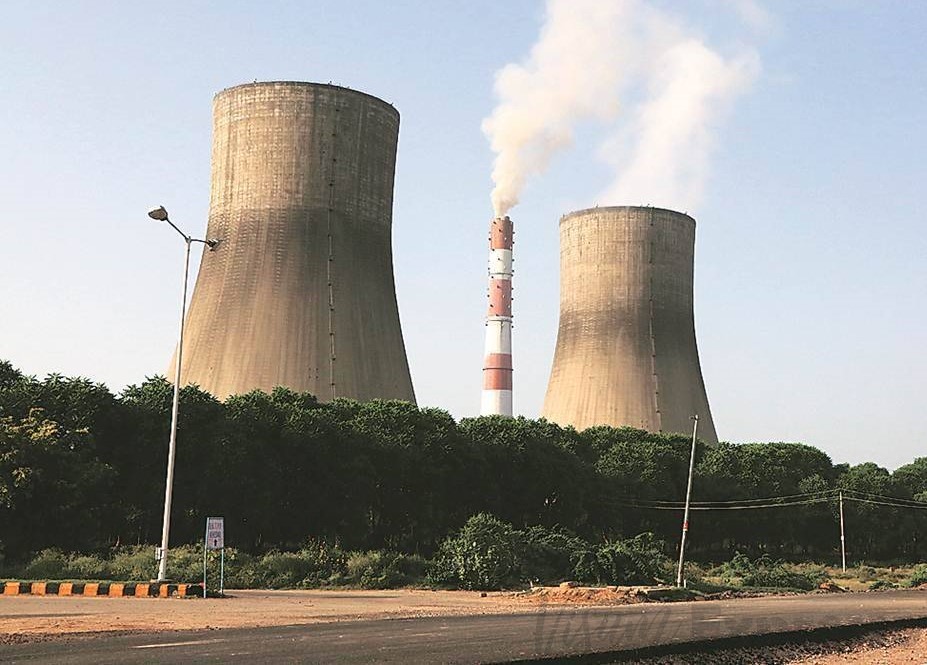
Thermal power plants are not responsible for worsening air quality in Delhi-NCR: NTPC But finding of CSE is against this statement.

By - Siju Kuriyedam Sreekumar -- Friday, June 04, 2021 , 02:59 AM

New Delhi :- State-run power giant NTPC officials said thermal power plants are not responsible for the deteriorating air quality in Delhi-National Capital Region (Delhi-NCR). The deterioration in Air Quality Index (AQI) in NCR is the most serious health issue in these COVID times. Vehicular emissions,brick-making sectors, construction activities, road dust, industrial emissions and above all agro-waste (parali) burning in the nearby states are contributing to the smog that threatens to have an irreversible effect on the health and immune system, NTPC said in a statement.

Coal-fired power plants have often been accused for increased pollution, which may not always be correct, it said. The coal-fired units of Dadri (NTPC plant) are closed since October, but the ambient air quality and AQI of NCR have been deteriorating day-by-day, NTPC said. All the units of NTPC Dadri power station are equipped with state-of-the-art systems to control emissions like ESP (electrostatic precipitator) for particulate matters, dry sorbent injection, desulfurization system for SOx emission and combustion modification for control of NOx emissions.

        Continuous Emission Monitoring System (CEMS) and Continuous Ambient Air Quality Monitoring Station (CAAQMS) are installed for real time monitoring of ambient air quality, it added. NTPC said its Dadri thermal plant has developed a facility for co-firing of rice stubble agro-waste pellets.
More than 8,000 tonnes of agro-waste pellets have been fired in the last two years which has avoided stubble burning in almost 4,000 acres of farmland. The use of agro-waste pellets for power generation at Dadri station is helping farmers financially and also in reducing the carbon footprint of power generation, it added.


CSE Study Report

Thermal power and brick-making sectors, two of the key contributors to severe air pollution in Delhi-NCR, might continue to add to the overload of toxic pollution despite regulations and some action, a new survey by the Centre for Science and Environment (CSE) indicates. Most thermal power plants and brick kilns will miss the December 2019 deadline for meeting new emission norms set by the Ministry of environment, forests & climate change (MoEF&CC) in 2015.

What does the CSE survey say about thermal power plants?

According to the survey, 83 per cent of the plants will not be able to comply with the 2019 deadline when it comes to sulphur dioxide (SO2) emissions, unless they fast-track the entire process starting from feasibility studies to construction and installation work.

Half of the region’s installed capacity may be able to meet the 2019 deadline for nitrogen oxide (NOx) control, but the remaining have not reported any plans to achieve compliance. In case of particulate matter (PM), about 35 per cent of the overall installed capacity will not meet the deadline.

"As things stand, 80 per cent of the plants will not meet the 2019 deadline. The concerned regulatory authorities must take immediate steps to prevent further slippage on achieving the target. State pollution authorities must ask power plants to furnish, immediately, the current emissions data and milestones with deadlines. Also, a suitable penalty mechanism should be introduced as a deterrent to ensure that plants stay on track to meet the norms,” says Priyavrat Bhati, programme director, energy unit, CSE.

What does the CSE survey say about brick kilns?

Brick kilns in the region continue to pollute despite some actions being taken. The Delhi-NCR region has over 3,000 legal brick kilns, which had been largely practicing the extremely polluting FCBTK process of manufacturing bricks. While these kilns have agreed to convert to a cleaner technology–zigzag process—a new CSE assessment reveals that more than half of the kilns have not converted to the zigzag technology efficiently, thereby negating any gains that might have accrued from them.

If the quality of conversion to zigzag technology is good, the emissions reduction can be as much as 50-70 per cent. However, only about 20 per cent of the surveyed kilns had done good conversion. About 30 per cent of the kilns had average conversion quality and will be able to reduce emissions by 20-30 per cent, compared to the FCBTK technology.

"Proper conversion of FCBTK to zigzag can reduce the pollution from brick kilns significantly. But our survey clearly shows that only about 20 per cent have done good conversion. The conversion quality of more than 50 per cent of the kilns is highly unsatisfactory and such conversions will not lead to any real gains in pollution control,” says Nivit Kumar Yadav, senior programme manager, CSE.

“Delhi-NCR’s comprehensive clean air action plan is floundering because of the apathy of the regulatory agencies. Our survey of brick kilns and thermal power plants shows that despite regulations and intervention of the Supreme Court and the EPCA, the implementation on the ground is highly compromised. Thermal power plants will not be able to meet stringent emission norms by 2019, and brick kilns’ conversion to a cleaner zigzag technology will not lead to real reductions in emissions,” says Chandra Bhushan, deputy director general, CSE.

"The bottom-line is that Delhi-NCR cannot afford poor implementation of the comprehensive clean air action plan. Winter, the season of severely polluted air quality, is approaching fast. It is time the government agencies on the ground, especially the central and state pollution control boards, ensure that the conversion of brick kilns to zigzag is done appropriately and thermal power plants expedite the setting-up of pollution control systems to meet the 2019 deadline,” Bhushan concludes.


LEAVE A REPLY

Security code:

COMMENTS

Be the first to comment